Gluten-Free Banana Muffins: Bakery Test Kitchen Recipe
2026-09-10
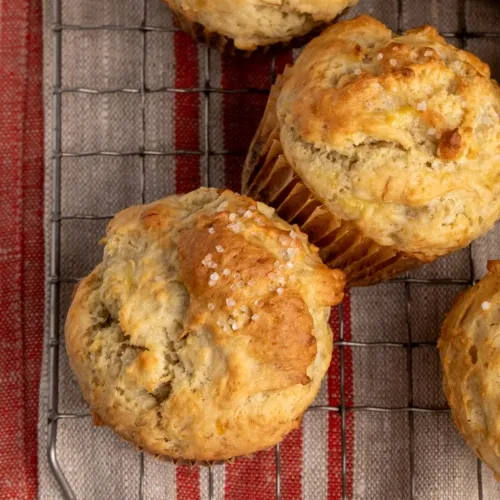
Most gluten-free muffins taste like sweet cardboard or soggy lead.
Back in 2021 at Sweety's Bakery, our weekend pastry case had this exact problem. People would take two bites of a banana muffin, smile politely, and push the plate away. You could see that nasty grey sludge line right against the parchment liner.
I threw away entire hotel pans of test batches trying to stop that sinkhole.
Look at a regular banana. Three quarters of what you just mashed with a fork is water. Not sugar. Water. Wheat flour handles that easily because gluten strands stretch into little balloons when steam expands. Rice flour? Forget it. It sits there like wet mud.
Our kitchen fix was dead simple.
Walk away from the bowl for twenty minutes. Seriously. The rice flour needs time to drink.
Next, set the oven blazing hot at 425 degrees. Give them six quick minutes to puff up. Then knock the heat down to 350 so they don't scorch.
No weird store gums. No sawdust texture. Just high bakery crowns that actually hold up.
Test Kitchen Production Numbers
Logged across twelve weekend bakes in our stone hearth deck ovens. We weigh everything down to the single gram.
The Trouble With Rice Starch and Fruit Water
Baking without wheat is tricky business.
Take wheat out of the bowl, and you lose that stretchy web that traps air pockets. Commercial gluten-free bags rely on white rice flour, brown rice, potato starch, and tapioca.
Here is what happens inside a hot muffin tin when you don't adjust for that:
First off, raw rice flour is basically crushed stone. It feels soft in your hands, but dry rice particles are tiny hard beads. If you stir batter and shove the tray straight into heat, those grains never soften up. You get that awful sand texture that sticks between your teeth.
Second, ripe bananas are full of juice. As the metal pan warms up, that fruit water turns into hot steam. Regular gluten stretches around steam bubbles like a rubber balloon. Weak rice starch just rips open. The steam collapses, and all that liquid settles into a heavy grey sludge layer at the bottom of your paper liner.
Third, the flat top problem. A gentle 350-degree oven is too lazy. The chemical leaveners react too slowly, the muffin edges set hard, and the middle never gets enough upward thrust to build a tall bakery peak.
The Pantry Lineup
Put your volumetric measuring cups in a dark cupboard.
One Saturday morning, our apprentice baker scooped three packed cups straight from the flour bin. That batch felt like heavy cement blocks. When you scoop with plastic cups, you can easily shove 160 grams into a space meant for 120 grams. That extra forty grams kills your moisture balance before you even crack an egg. Always convert cups to metric weight with our free cups to grams converter before you start measuring.
We throw 260 grams of King Arthur 1-to-1 flour into our big mixing bowl.
We also toss in 50 grams of fine almond flour. Why? Almonds bring natural fat. That plant fat keeps the crumb soft so your muffin doesn't turn into stale sand by Tuesday.
For lift, stir in two teaspoons of baking powder, one teaspoon of baking soda, a spoonful of cinnamon, and four grams of salt.
For bananas, you want three spotted ones—about 340 grams on the scale. Green ones taste like grass. Black skins are too wet and sour. Freckled bananas are just right.
Whisk the fruit with 100 grams of cane sugar, 75 grams of dark brown sugar, two room-temperature eggs, and vanilla.
Now, the fat split. We melt 60 grams of sweet butter, but we also pour in 50 grams of plain canola oil. Pure butter turns rock hard when chilled. Oil stays liquid forever. Blending both fats gives you rich dairy flavor while keeping the crumb tender for four days on your counter.
Interactive Baker Tool: Batch Scaler
Dial in how many muffins you want to bake. We will recalculate your weighed bananas, flour blend, and oil rations.
The Step-by-Step Kitchen Method
At 5 AM in our bakery, I always preheat our deck oven hot.
We line the muffin pans with brown unbleached paper cups.
I mash the bananas right against the bottom of our big bowl with a fork. I never touch a blender for this. Spinning blades chop the fruit into thin liquid, and that makes a watery mess.
I whisk eggs, sugars, melted butter, and oil in a deep bowl. It takes about thirty seconds to get that shiny butterscotch look.
I gently stir the dry flour blend in with an old spatula. As soon as the flour blends into the wet batter, I stop.
Then comes the most important part of my entire morning: I leave the kitchen.
I walk away from the bowl for twenty minutes to drink my coffee. That rest lets the dry rice starch drink up the fruit juice. When I come back, the batter looks like thick chocolate pudding.
We scoop the batter right to the very rim of each cup.
Six minutes in that hot oven pushes the batter up into giant bakery crowns. Then I drop the dial to 350 and let them bake for fifteen more minutes.
Don't let them sit inside hot metal wells. Steam gets trapped under the papers, so pop them out onto cooling racks right away.
Packing, Storing, and Cottage Bakery Margins
In our retail bakery, we bake these in batches of thirty-six.
Let them cool down to room temperature before packing. Store them in a cardboard bakery box or a vented container. If you seal warm muffins in an airtight plastic container, trapped moisture softens that crispy sugar crown into sticky syrup.
They keep well on the kitchen counter for four days. If you want to freeze a batch, wrap each cooled muffin in parchment and slide them into a freezer bag. They freeze well for three months. Thaw on the counter for an hour, or warm them in a 300-degree toaster oven for seven minutes.
If you bake for farmers markets or run a home cottage business, these muffins are an absolute goldmine. A dozen muffins run about $5.20 in raw ingredients. Pack them into clear four-pack clamshells for $13.50, and you walk away with healthy profit margins. Check your ingredient overhead and markup with our free bakery profit margin calculator, and test your bundle sales with our bakery discount calculator.
For official nutritional standards on fresh fruit and agricultural produce, check the public logs at USDA FoodData Central. When vetting celiac safety, we follow the cross-contamination guidelines from Coeliac UK and commercial flour milling standards from King Arthur Baking.
Storage and Freezing Tips
Store cooled banana muffins in an airtight container lined with a paper towel for up to 4 days at room temperature. The paper towel absorbs excess humidity and prevents the muffin tops from turning sticky. You can also freeze individual muffins in a freezer bag for up to 3 months—just thaw on the counter or warm for 20 seconds in the microwave.
For home bakers and cottage bakeries, calculate batch costs with our free Bakery Profit Margin Calculator.
Baking tall, tender gluten-free banana muffins is all about giving the batter a quick rest to hydrate the starches and starting with a hot oven. Once you taste that crackly sugar top and soft center, you'll never settle for dry cafe muffins again. Enjoy them warm with a spread of butter!
Baking or Selling This Recipe? Use Our Free Tools
Baking in Your Kitchen? Convert & Scale in Grams
Measuring cups can vary by up to 25% in flour weight. Convert cups to exact metric grams or scale this entire recipe (2x, 3x) in seconds.
Selling Custom Cakes? Price for Real Bakery Profit
Calculate ingredient food costs, packaging, and labor to set high-margin pricing for your home bakery or custom pastry orders.

Sara Ait Dahan
Professional Baker & Founder of Sweety's Bakery
Passionate about baking precision and culinary science, Sara founded Sweety's Bakery to empower home bakers and pastry chefs worldwide. Built from real bakery workbench experience, she creates tested gluten-free recipes, calibrated density calculators, and bakery business tools.