How to Make the Viral Dubai Chocolate Bar at Home (Pistachio Knafeh)
2026-09-18
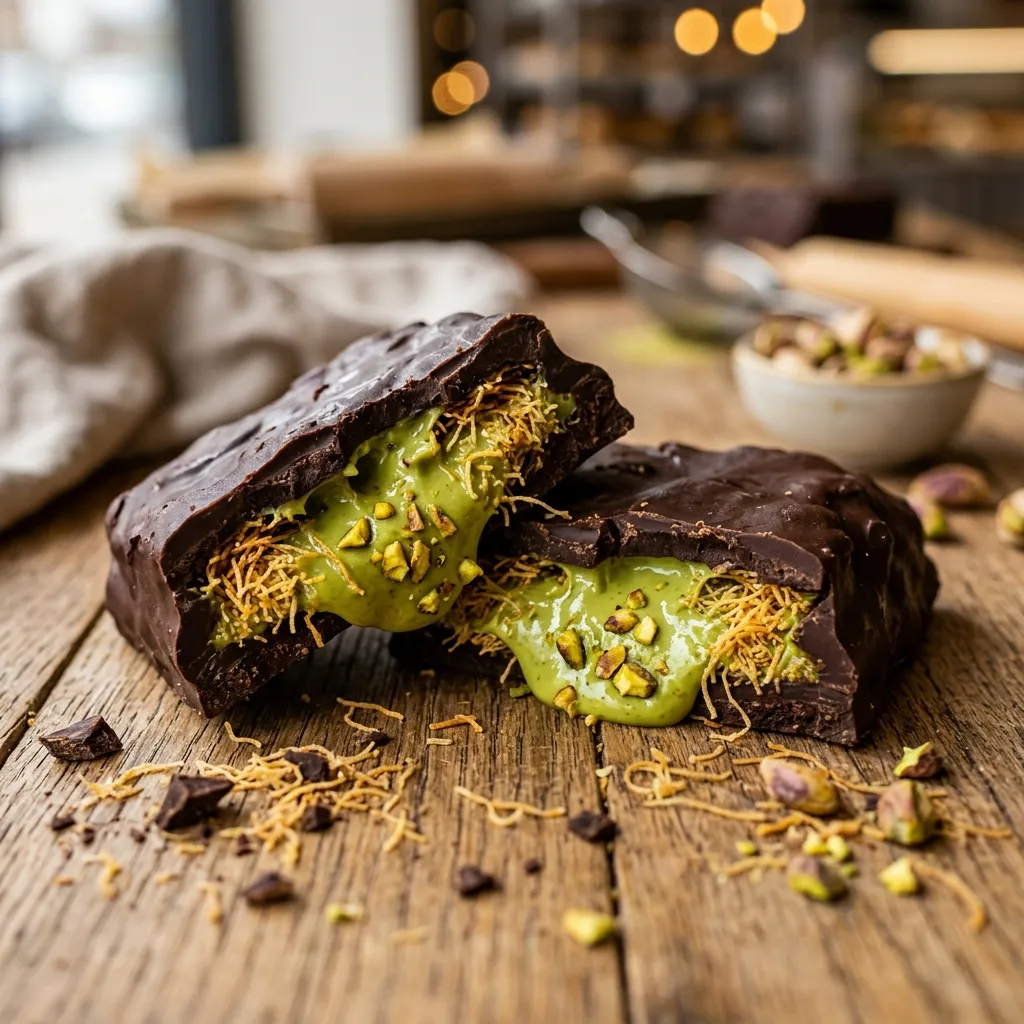
The moment that green pistachio chocolate bar went viral on TikTok, my bakery phone didn't stop ringing.
Dozens of customers wanted one question answered: can we make a gluten-free Dubai chocolate bar?
The original bar from Dubai is packed with toasted shredded kataifi pastry, tahini, and sweet pistachio butter, sealed inside milk chocolate.
The catch? Traditional kataifi is shredded wheat. One bite would send anyone with celiac disease straight to the emergency clinic.
I bought gluten-free phyllo dough sheets and sliced them with a bench scraper into hair-thin strips. I threw them into a hot pan with melted butter. In five minutes, they toasted into loud golden threads.
I mixed that crunchy pastry into sweet pistachio butter and poured tempered chocolate over it. The crunch was so loud my line cooks stopped working to look over.
Quick Baker's Notes for Best Results
- Kataifi Toasting Time: 11 to 13 minutes in clarified butter over medium-low heat until mahogany gold.
- Pistachio-to-Tahini Flavor Ratio: 8:1 (200g sweetened pistachio spread to 25g pure roasted sesame tahini).
- Shell Wall Thickness: Exactly 3mm (measured at perimeter) to support heavy filling without cracking.
- Working Chocolate Pour Temperature: 88°F to 89°F for milk chocolate; 89°F to 91°F for dark chocolate.
The Three Pillars of the Dubai Bar
The viral Dubai chocolate bar relies on a dynamic balance of textures: a crisp exterior shell that yields with a sharp crack, followed by an intensely nutty, crispy, rich core inspired by traditional Middle Eastern knafeh pastry.
1. Kataifi Dough (Shredded Phyllo)
Kataifi consists of micro-thin strands of unleavened flour dough spun onto rotating heated copper plates. You will find it in the frozen section of Middle Eastern or Mediterranean grocers. Raw kataifi is pale, limp, and laden with moisture. To achieve that signature audio-crack crunch, you must drive out every drop of water through controlled fat frying.
2. The Pistachio Emulsion
Do not use raw, unsweetened 100% pistachio paste alone; it will taste overly savory and grassy. Look for Italian crema al pistacchio or pistachio spread containing at least 40% pistachio paste blended with vegetable fats and sugar. To balance the intense sweetness, our formula adds high-grade roasted tahini. The sesame paste provides earthy bitterness that rounds out the palate.
3. High-Fluidity Chocolate
A thick, gloppy chocolate will create clunky, uneven bar walls that ruin the eating experience. You need a chocolate with three drops of fluidity on the manufacturer scale, meaning it contains at least 31% to 35% total fat.
Ingredient Ratios by Weight
Baking is a science of percentages. When measuring ingredients, skip cups and spoons—we always use our baking conversion tool for exact metric weights because volumetric measurements of shredded pastry can swing weight by over forty percent.
- High-Quality Milk Chocolate (38% cacao) or Dark Chocolate (54% cacao): 350 grams
- Frozen Kataifi Dough (thawed overnight in the fridge): 100 grams
- Clarified Butter (Ghee): 30 grams (clarified butter removes water content that makes dough soggy)
- Sweetened Pistachio Cream: 200 grams
- Pure Roasted Sesame Tahini: 25 grams
- Fine Sea Salt: 1.5 grams (essential for cutting fat richness)
- White Chocolate & Edible Fat-Soluble Luster Dust (optional): 30 grams for marbling the mold
Step 1: Clarifying Butter and Toasting the Kataifi
Water is the enemy of crisp pastry. Regular unsalted butter contains roughly 16% to 18% water. When you fry delicate phyllo strands in whole butter, the water steams the pastry before the fat can fry it, leaving a chewy texture that softens within hours.
- Prep the Dough: Pull 100 grams of thawed kataifi pastry onto a large cutting board. Using a heavy chef's knife, cut the strands crosswise into half-inch shards. Fluff the cut dough with your fingers to separate clumps.
- Heat the Skillet: Place a heavy 10-inch stainless steel or cast-iron skillet over medium-low heat. Add 30 grams of ghee or clarified butter.
- The Slow Toast: Add the chopped kataifi. Use heat-safe tongs and a silicone spatula to keep the strands moving continuously. Do not walk away. The pastry will take 11 to 13 minutes to transition from limp white threads to a uniform, deep hazelnut gold.
- Cool Immediately: The instant the pastry reaches an amber hue, dump it into a stainless steel bowl. If you leave it in the hot pan, the residual heat will scorch the fragile strands in seconds. Let the kataifi cool completely to room temperature (about 20 minutes).
Step 2: Mixing the Pistachio-Tahini Core
Once your toasted kataifi is cool to the touch, pour in 200 grams of pistachio cream, 25 grams of roasted tahini, and 1.5 grams of fine sea salt.
Fold the mixture together with a flexible spatula until every strand of toasted dough is glossy and coated. The texture should look thick, luscious, and intensely green. Taste a small pinch: the crunch should crack loudly between your teeth, accompanied by a decadent nutty sweetness balanced by the savory sesame baseline.
Step 3: Tempering and Casting the Chocolate Shell
If you melt chocolate and let it solidify without tempering, the cocoa butter cools into unstable crystal forms. Your finished bar will look dull, develop white chalky fat bloom, and melt into liquid at body temperature. Review the King Arthur Baking chocolate tempering and fat bloom science for a deep look into polymorphic crystallization.
We use the seeding method for foolproof tempering:
- Melt the Base: Melt 250 grams of your chocolate in a dry glass bowl over a simmering water bath (bain-marie) until it reaches 115°F for milk chocolate (or 120°F for dark chocolate). Make certain not a single droplet of steam touches the chocolate, or it will seize.
- Seed and Cool: Remove the bowl from the heat. Stir in the remaining 100 grams of finely chopped unmelted chocolate (your seed). Stir constantly until the temperature drops to 82°F.
- Working Range: Place the bowl back over the steam for 3 to 5 seconds at a time until the temperature rises to 88°F for milk chocolate.
- Cast the Mold: Pour the tempered chocolate into a deep silicone chocolate bar mold (at least 20mm deep). Swirl the mold to coat the bottom and all vertical side walls to a thickness of approximately 3mm. Invert the mold over your bowl to let excess chocolate run out, scrape the top surface clean with a bench scraper, and refrigerate for 12 minutes until set.
Step 4: Loading the Filling and Capping the Bar
Remove the mold from the refrigerator. The chocolate shell should look glossy and release cleanly from the edges.
- Pack the Core: Spoon the prepared pistachio knafeh filling into the hollow cavity. Use the back of a spoon to press the filling gently into the corners, leaving a 2mm gap below the top rim of the mold.
- Cap the Bottom: Pour the remaining tempered chocolate over the filling. Spread it to the edges with your offset spatula. Run your bench scraper across the silicone mold surface to create a completely flat, flush bottom.
- Final Crystallization: Refrigerate the bar for 25 minutes. Once fully set, gently peel back the silicone edges. The bar will slide out effortlessly with a mirror-like shine and crisp geometric edges.
Commercial Costing and Pricing Analysis
Because imported Italian pistachio cream and specialty kataifi carry premium price points, cottage food businesses and retail bakeries must cost these bars with precision. According to the USDA FoodData Central nutrient standards for tree nuts, raw pistachio products carry high ingredient overhead. In accordance with FDA guidelines for food labeling and shelf-stable confectionery, these chocolate bars maintain room-temperature stability for up to 14 days when sealed. Plug your packaging and raw ingredient costs into our bakery profit margin calculator to set a retail price that guarantees healthy business returns. (If you have leftover tempered chocolate and pistachio cream from this build, put them to work using our cake pops tutorial for repurposing chocolate and fillings.)
Storage and Serving Notes
Store your finished Dubai chocolate bars in an airtight container in the refrigerator for up to 2 weeks. The crisp kataifi keeps its signature crunch best when kept cold. Let the bar sit at room temperature for 5 minutes before cutting so the chocolate shell slices cleanly without cracking.
If you sell artisanal confections, calculate your luxury batch overhead and retail price points using our free Bakery Profit Margin Calculator.
Recreating the viral Dubai chocolate bar at home is an absolute showstopper. Between the crisp toasted kataifi, rich pistachio cream, and snappy chocolate shell, every bite is pure luxury. Cut into bars and share the excitement with friends and family!
Baking or Selling This Recipe? Use Our Free Tools
Baking in Your Kitchen? Convert & Scale in Grams
Measuring cups can vary by up to 25% in flour weight. Convert cups to exact metric grams or scale this entire recipe (2x, 3x) in seconds.
Selling Custom Cakes? Price for Real Bakery Profit
Calculate ingredient food costs, packaging, and labor to set high-margin pricing for your home bakery or custom pastry orders.

Sara Ait Dahan
Professional Baker & Founder of Sweety's Bakery
Passionate about baking precision and culinary science, Sara founded Sweety's Bakery to empower home bakers and pastry chefs worldwide. Built from real bakery workbench experience, she creates tested gluten-free recipes, calibrated density calculators, and bakery business tools.