Mastering Homemade Pumpkin Butter: The Secret to Intense Autumn Flavor
2026-09-04
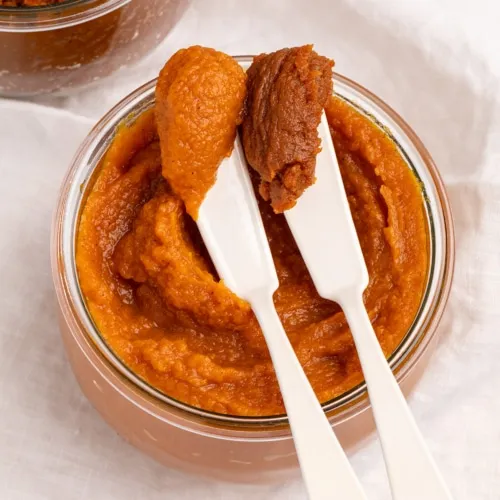
Back in October 2020, I tried baking forty pumpkin tarts for our weekend display case.
I popped open three commercial cans of pumpkin puree, mixed the batter, and slid the sheet pans into our deck oven.
They were an utter disaster.
The crusts went completely limp, the spice flavor vanished into thin air, and the centers stayed as wet as soup. That afternoon, my head pastry chef pulled me over to the stainless table and weighed a can of puree on our digital scale. Then she heated it in a wide cast iron pan until steam stopped rising.
Half the weight was gone. Straight water.
That was the day I stopped using raw pumpkin from a tin.
Now, we cook the squash pulp down with dark maple syrup, raw apple cider, and cinnamon before it ever touches a mixing bowl. In twenty minutes on the stove, that extra fluid evaporates into the kitchen air.
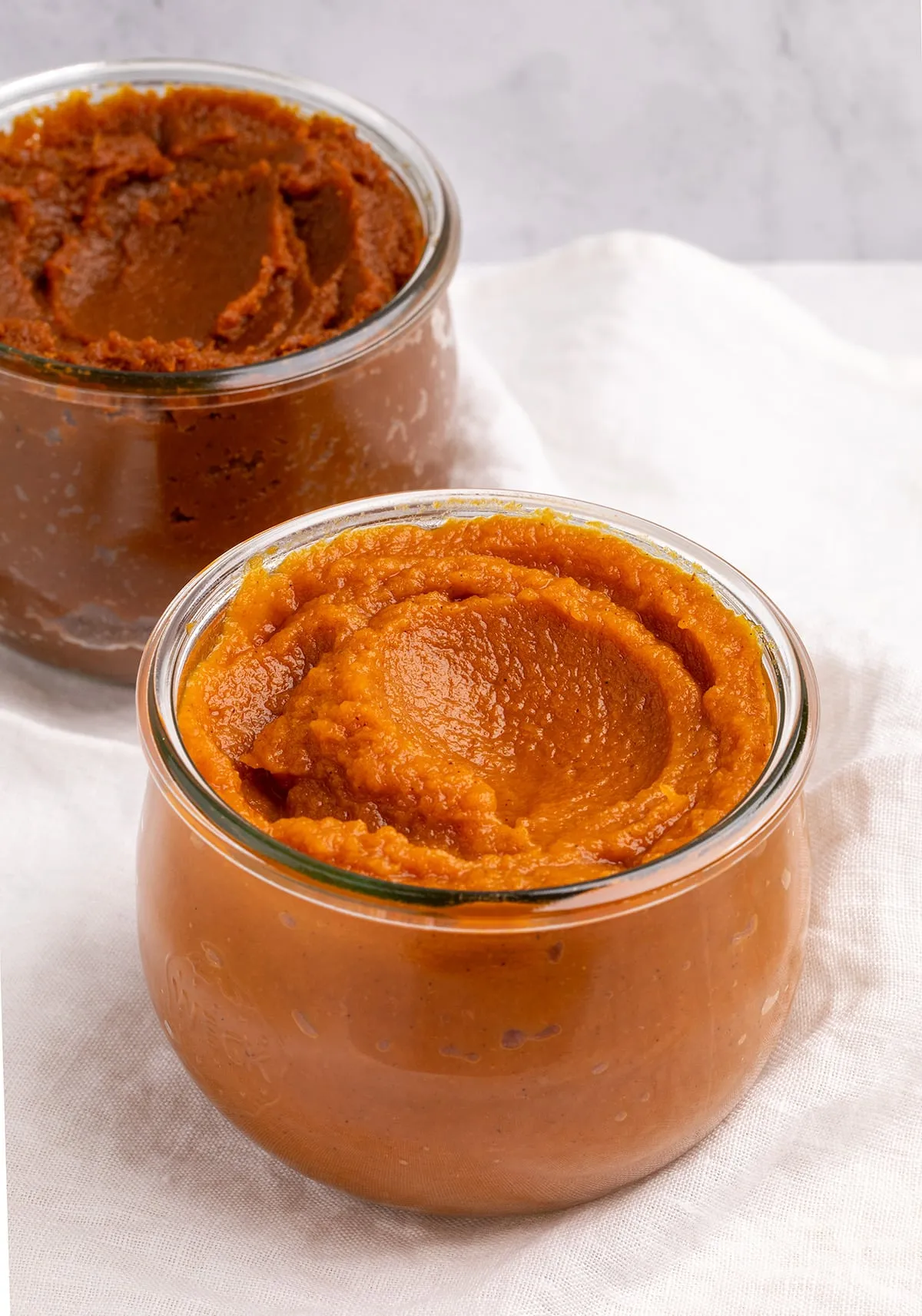
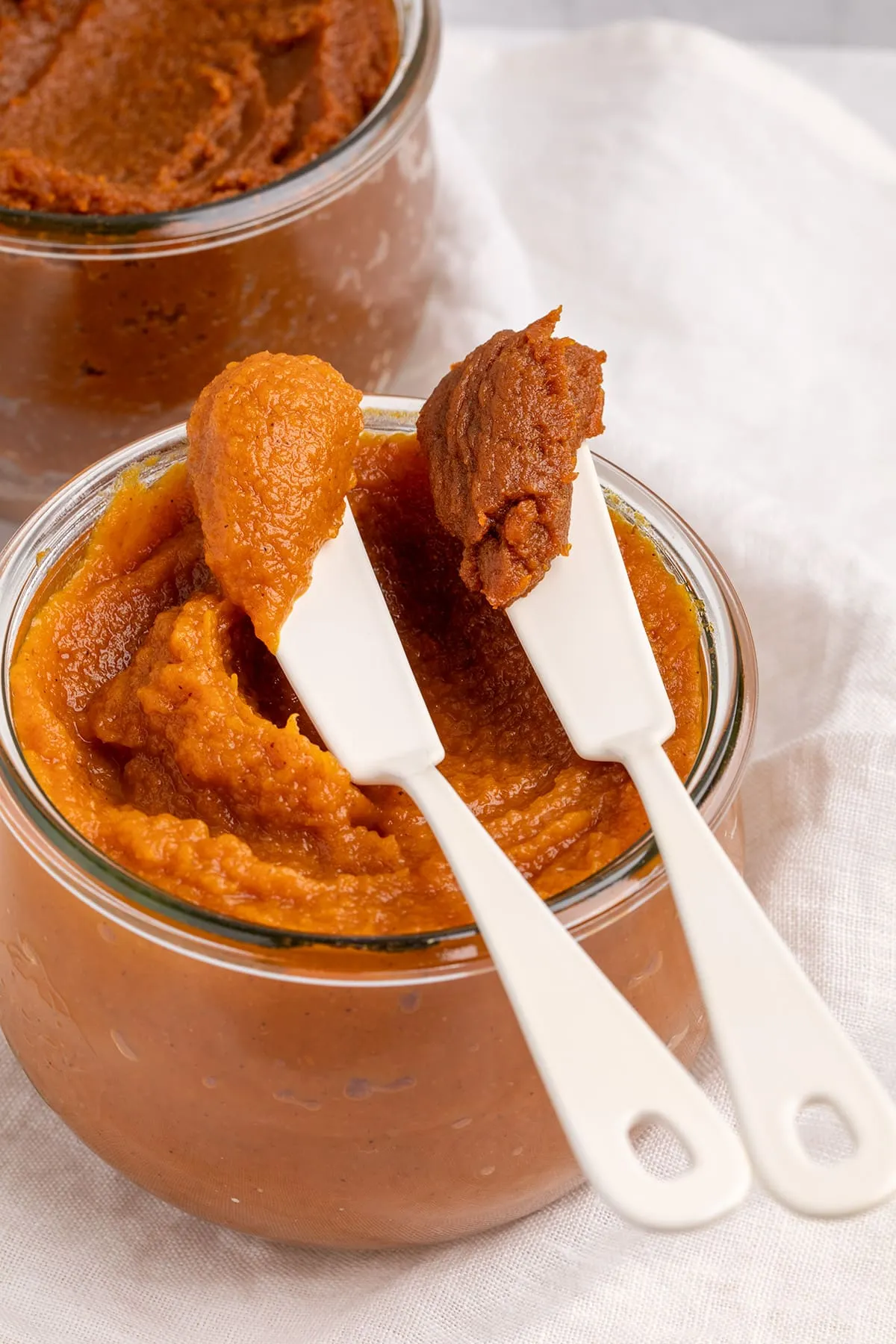
What is left behind is deep mahogany pumpkin butter that actually tastes like real spices.
Batch Production & Reduction Metrics
Data logged across 16 test batches at Sweety's Bakery using 12-inch heavy-gauge tri-ply stainless steel skillets for rapid surface evaporation.
The Food Science of Puree Evaporation
Fruit and vegetable butters contain zero dairy butter. In historical culinary terminology, "butter" refers to a fruit pulp cooked down until thick, smooth, and spreadable like dairy churned butter. When you simmer squash pulp, three distinct biochemical transformations occur simultaneously:
Free Water Evaporation
Canned squash puree is essentially a suspension of insolubles suspended in vegetable water. As heat breaks the surface tension, steam escapes continuously. If you cook your batch in a tall, narrow pot, the steam condenses on the cold upper walls and drips straight back into your butter, doubling your cook time. We insist on using a wide 12-inch (30 cm) skillet. The broader surface area accelerates evaporation, stripping 180 grams of water out of a 425-gram can in less than 25 minutes.
Fructose and Sucrose Concentration
As water leaves the skillet, the natural sugars from the pumpkin, maple syrup, and reduced cider concentrate rapidly. The natural sweetness triples in intensity without requiring cups of refined white sugar. This concentrates the refractive sugar density, yielding that silky mouthfeel that glides effortlessly across toast.
Maillard Reactions and Spice Bloom
Ground cinnamon, ginger, cloves, and nutmeg contain volatile aromatic oils such as cinnamaldehyde and eugenol. These essential flavor compounds are fat- and alcohol-soluble, but they bloom vividly when heated gently in a bubbling, slightly acidic sugar matrix. Simmering the spices directly inside the reducing pulp extracts their full fragrance far better than whisking dry spices into raw cold puree at the last second.
Essential Ingredients and Precise Proportions
We run our kitchen on strict metric weight. Volumetric cups can vary by up to 25 grams per scoop depending on how settled your puree is in the tin. You can double-check all volume-to-weight conversions using our free cups to grams converter before measuring your ingredients.
Canned Puree vs. Sugar Pumpkin Flesh
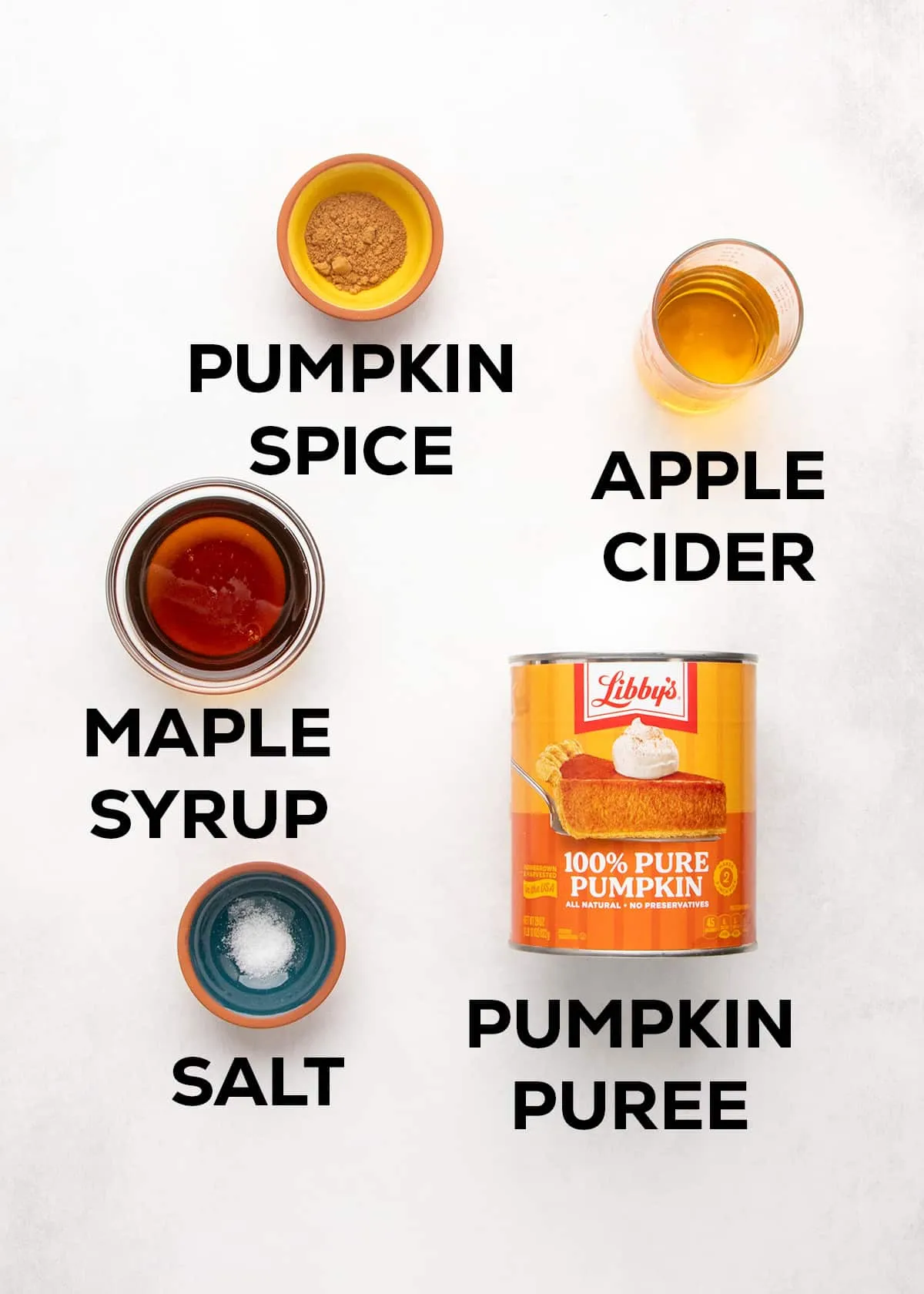
- Canned 100% Pure Pumpkin (425 g / 1 standard can): We use standard commercial puree (such as Libby's, which is actually Dickinson squash). According to nutrient profiles documented in USDA FoodData Central on canned pumpkin puree, 100g of pure canned pumpkin delivers roughly 34 calories and 2.9g dietary fiber with negligible fat. It yields a reliable, uniform pectin and starch baseline with consistent acidity.
- Roasted Pie Pumpkin (Alternative): If roasting fresh, choose small sugar pumpkins (1 to 1.5 kg). Split them, remove the pulp, roast face-down at 200°C (400°F) until pierced easily with a fork, then puree in a high-speed blender. Fresh pumpkin holds up to 6% more free water than canned squash, so you will need to add an extra 6 to 8 minutes of pan reduction time.
Liquid Bases and Sweeteners
- Unfiltered Apple Cider (120 ml / 125 g): Avoid clear processed apple juice. Raw unfiltered cider contains natural malic acid and suspended pectin that balance the heavy earthy notes of winter squash while aiding gel formation.
- Grade A Dark Maple Syrup (80 ml / 105 g): Delivers rich notes of wood smoke, vanilla, and caramel.
- Dark Brown Sugar (50 g): The molasses content provides mineral depth and gives the finished spread its glossy, dark amber mahogany hue.
- Fresh Lemon Juice (15 ml / 1 tbsp): Adds vital citric acidity to slice through the dense starch.
The Spice Blueprint
- Ground Ceylon or Saigon Cinnamon: 1 1/2 teaspoons (4 g)
- Ground Ginger: 1 teaspoon (2.5 g) for sharp heat
- Freshly Grated Nutmeg: 1/2 teaspoon (1.2 g)
- Ground Cloves: 1/4 teaspoon (0.6 g)
- Fine Sea Salt: 1/2 teaspoon (3 g) to sharpen flavor contrast
Interactive Calculator: Scale Your Pumpkin Butter Batch
Enter your starting pumpkin puree weight in grams to calculate scaled spices, cider reduction, and expected finished jar yield.
Step-by-Step Stovetop Technique
Do not step away from your stove while reducing pumpkin butter. Because starch thickens quickly, pockets of trapped steam can burst upward and spatter hot puree across your counter. Keep a long silicone spatula ready and use a splatter screen if necessary.
Step 1: Whisk the Base Cold
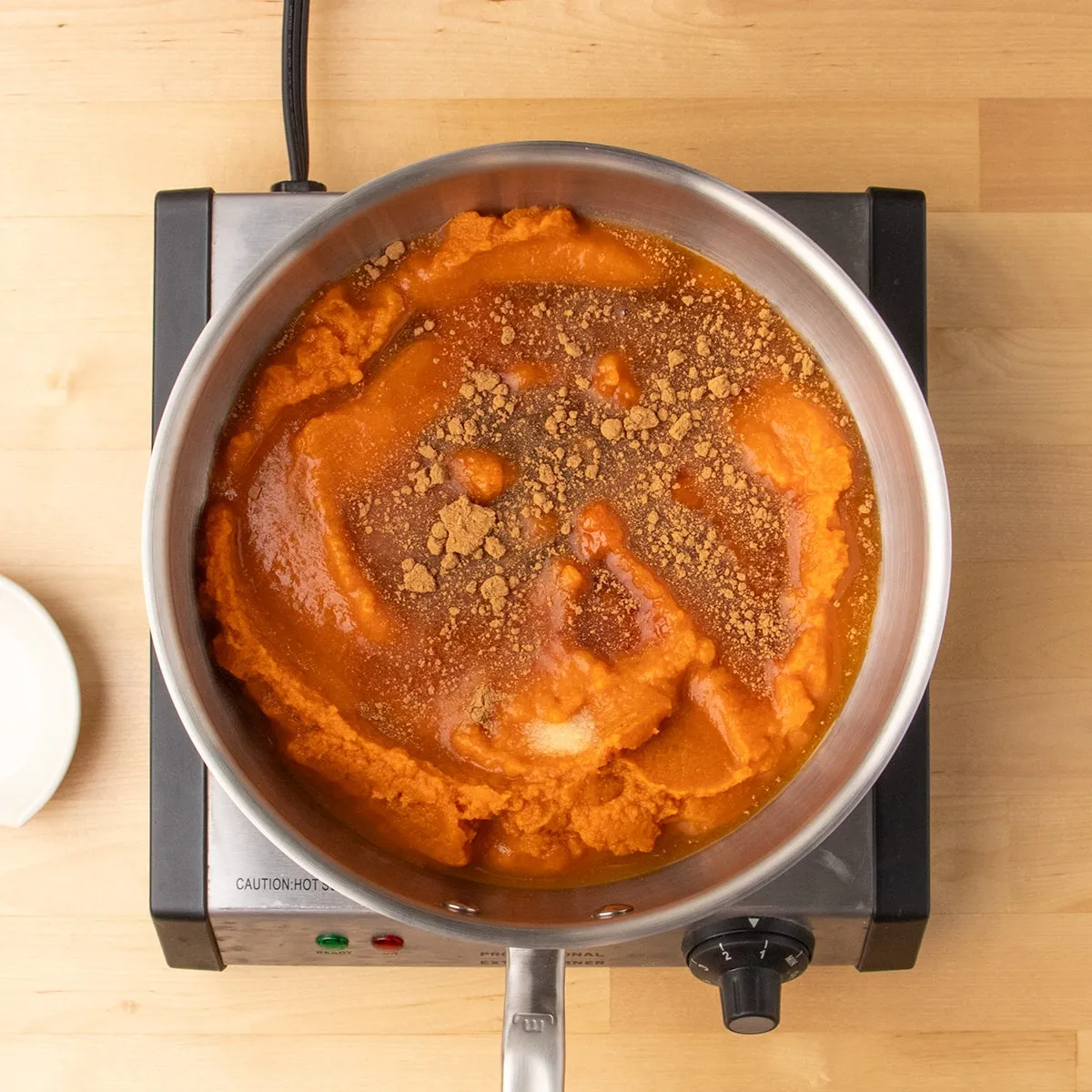
In your wide stainless steel skillet or enameled cast iron braiser, combine the pumpkin puree, apple cider, maple syrup, dark brown sugar, lemon juice, spices, and salt before turning on any heat. Whisking cold guarantees that the dry spices dissolve smoothly into the liquid without forming stubborn, dry pockets of cinnamon.
Step 2: Bring to a Gentle Bubble
Place your skillet over medium heat until small bubbling craters appear across the surface (roughly 90°C to 92°C). Immediately reduce the flame to medium-low. You want steady, gentle evaporation—never a violent, rolling boil that scorches the delicate sugars against the bottom of the pan.
Step 3: Constant Figure-Eight Reduction
Stir continuously using a flat-edged silicone spatula in a slow figure-eight motion. Scrape the perimeter and corners where reduction happens fastest. As water vapor leaves the pan, the mixture transitions from loose and opaque to deep amber and translucent.
Step 4: The Mound Test
After 18 to 22 minutes, test the consistency. Drag your spatula cleanly through the middle of the skillet. If the puree parts cleanly and holds a distinct channel for 3 full seconds before slowly flowing back together, your butter is ready for toast. If you need a dense pastry filling for bakery rolls or layered cookies, simmer 4 minutes longer until the puree mounds firmly upon itself without any weeping liquid rings.
Commercial Bakery Applications and Profit Margins
Pumpkin butter is not just a morning spread; it is a high-value staple ingredient in professional pastry kitchens. Here is how we deploy it across our production line:
Pastry Fillings and Swirls
We fold 40 grams of chilled, reduced pumpkin butter into our laminated brioche dough and babka loaves. Unlike watery puree that causes dough delamination and soggy bottoms, reduced pumpkin butter holds its shape and bakes into a decadent, fudgy ribbon. It also makes an exceptional autumn sandwich filling when paired with our crunchy, homemade gluten-free biscoff cookies.
Commercial Batching and Packaging Costs
From a cottage bakery perspective, pumpkin butter offers extraordinary gross margins. A single 425 g can of wholesale puree costs approximately $1.40. Add cider, spices, and sweetener, and your total batch ingredient cost sits at roughly $2.85 for 380 grams of finished butter. Package that in an 8-ounce glass hex jar with a stamped label and sell it for $9.50. You can analyze your own cottage kitchen food margins using our bakery profit margin calculator to price seasonal preserves accurately.
Critical Food Safety: The Canning Warning
There is a widespread, dangerous myth circulating on social media that homemade pumpkin butter can be safely water-bath canned or pressure-canned for shelf-stable pantry storage. As culinary professionals, we must be blunt: you cannot safely can pumpkin butter at home.
The National Center for Home Food Preservation canning safety bulletin explicitly warns against home canning of any mashed squash or pumpkin purees. Pumpkin is a low-acid vegetable with a pH ranging between 4.9 and 5.2. Because pumpkin butter is dense and viscous, heat transfer during water-bath or pressure canning is too slow and irregular to guarantee that the core of the jar reaches 116°C (240°F)—the temperature required to eliminate Clostridium botulinum bacterial spores.
In addition, technical research referenced in the King Arthur Baking guide on fruit purees and moisture reduction confirms that commercial operations use industrial steam kettles with continuous mechanical agitation and commercial acidification agents to safely process shelf-stable pumpkin spreads. Home equipment simply cannot replicate those sterile thermodynamic conditions.
Safe Preservation Methods
- Refrigerator Storage: Transfer your cooled pumpkin butter into clean glass mason jars with airtight lids. Store at 3°C to 4°C (38°F to 40°F) for up to 3 weeks.
- Freezer Preservation: Ladle the butter into freezer-safe containers or silicone freezing trays, leaving 1/2 inch (1.2 cm) of headspace for expansion. Freeze solid at -18°C (0°F) for up to 6 months. Thaw overnight in the refrigerator before using.
Storage and Safety Notes
Because pumpkin is a low-acid food, homemade pumpkin butter cannot be safely canned for shelf-stable pantry storage. Instead, spoon into clean glass jars, seal tightly, and store in the refrigerator for up to 3 weeks, or freeze for up to 6 months in freezer-safe jars (leaving 1/2 inch of headspace for expansion).
If you sell seasonal holiday spreads or gift baskets, calculate your packaging and ingredient costs using our free Bakery Profit Margin Calculator.
Making a jar of homemade pumpkin butter is the easiest way to bring cozy autumn flavor into your kitchen. Spoon it over toast, swirl it into oatmeal, or use it to fill fall pastries. Store a jar in the fridge and enjoy the warmth all season long!
Baking or Selling This Recipe? Use Our Free Tools
Baking in Your Kitchen? Convert & Scale in Grams
Measuring cups can vary by up to 25% in flour weight. Convert cups to exact metric grams or scale this entire recipe (2x, 3x) in seconds.
Selling Custom Cakes? Price for Real Bakery Profit
Calculate ingredient food costs, packaging, and labor to set high-margin pricing for your home bakery or custom pastry orders.

Sara Ait Dahan
Professional Baker & Founder of Sweety's Bakery
Passionate about baking precision and culinary science, Sara founded Sweety's Bakery to empower home bakers and pastry chefs worldwide. Built from real bakery workbench experience, she creates tested gluten-free recipes, calibrated density calculators, and bakery business tools.